For generations of Americans, the word “propaganda” has conjured images of Iron Curtains and totalitarian regimes—a tool wielded by adversarial states like the Soviet Union or present-day communist nations to control their populations and shape a distorted reality. The prevailing narrative has long been that “they” have propaganda—a heavy-handed, overt manipulation of information—while “we,” in a free and democratic society with a robust and independent press, are immune to such tactics.
This deeply ingrained belief, however, is not only a shield against recognizing manipulative communication but also a significant blind spot. A closer examination of history and the current media landscape suggests that while the forms and methods may differ, the United States has a rich and ongoing history of employing propaganda—arguably on a scale that rivals, and in some ways surpasses, that of countries often critiqued for the practice.
The roots of this American exceptionalism regarding propaganda can be traced, in part, to the Cold War era. The ideological struggle between the United States and the Soviet Union was not solely fought with military might but also through a fierce battle for hearts and minds. Both nations engaged in extensive propaganda efforts, utilizing a variety of media to promote their way of life and demonize the other. American propaganda of this era frequently highlighted the freedoms and material abundance of the West while portraying communist nations as oppressive and economically deprived. Educational films and materials, like the Cold War-era staple “How to Spot a Communist,” were used in schools, embedding anti-communist sentiment and an inherent distrust of information from those systems from a young age.
This historical context fostered a perception that propaganda was something done by the enemy—a tool of authoritarianism alien to democratic values. What was often overlooked was the sophisticated and pervasive nature of American efforts, often couched in terms like “public diplomacy,” “information campaigns,” or simply “public relations”.
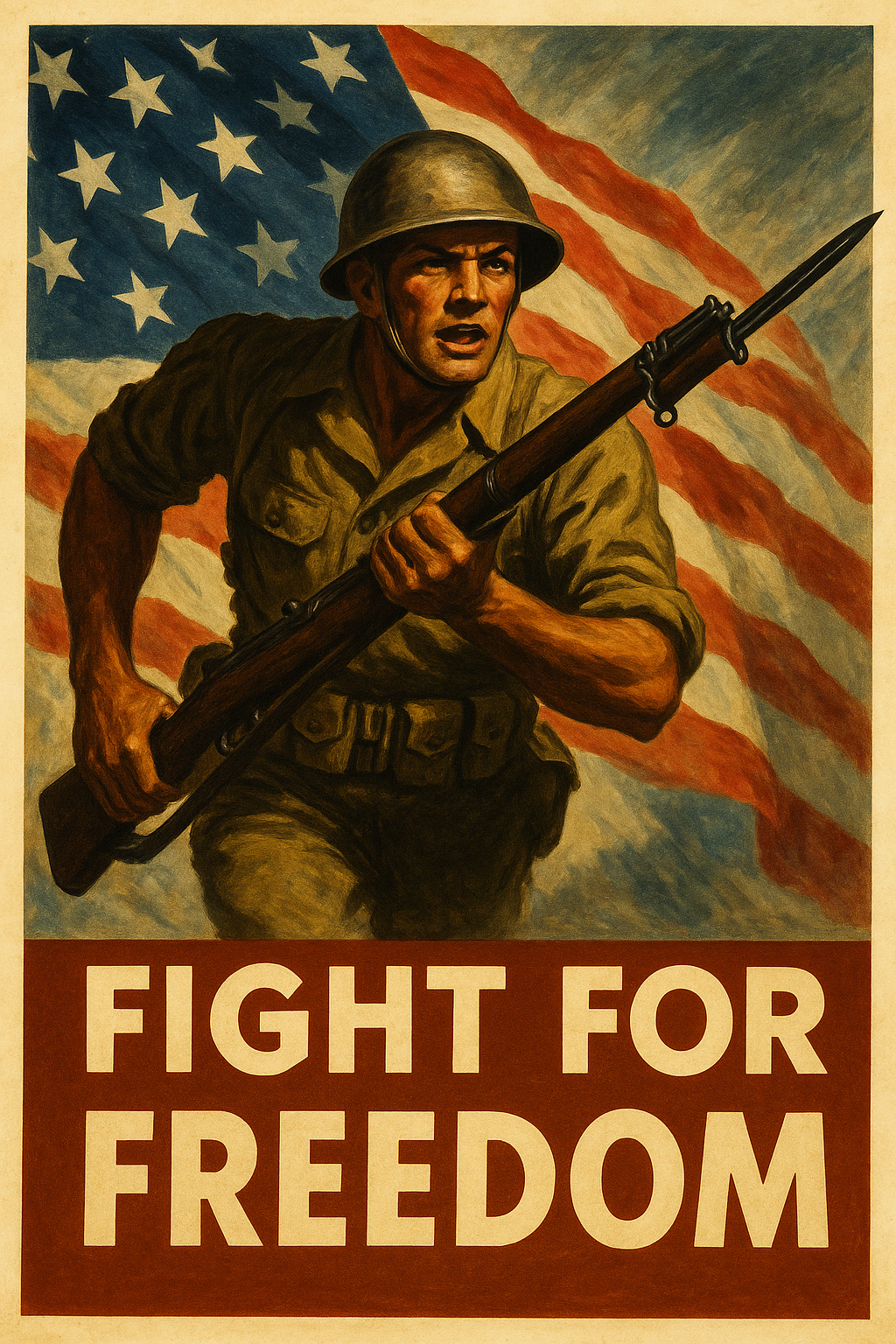
The U.S. government has a long history of organized attempts to persuade its own population and others. From the Committee on Public Information during World War I to the Office of War Information in World War II and the United States Information Agency during the Cold War, official bodies have been tasked with managing the flow of information to shape public opinion in favor of government policies. While these efforts were often justified by the exigencies of war or the fight against communism, they nonetheless employed techniques recognized as propaganda—the deliberate dissemination of information to influence an audience.
Beyond direct government initiatives, the structure and economics of the American media landscape also create fertile ground for the dissemination of narratives that serve to reinforce existing power structures and limit dissenting viewpoints. Media consolidation—with a shrinking number of corporations controlling a vast percentage of news outlets—raises concerns about the diversity of perspectives and the potential for corporate or political interests to influence content. The reliance on advertising revenue can also shape news coverage, prioritizing stories that attract viewers or readers over those that may be critical of powerful institutions.
Academic research has delved into the nature and impact of propaganda within the U.S. Studies have analyzed how information has been framed during conflicts, such as the build-up to the Iraq War, with findings suggesting the use of propaganda techniques in mainstream media coverage. Experts in communication have also highlighted how the very definition of propaganda in the U.S. has been narrowed—often applied only to the most blatant and easily discernible forms, particularly those from official adversaries—while more subtle and systemic methods are often left unexamined.
“No matter how paranoid or conspiracy-minded you are, what the government is actually doing is worse than you imagine.”
-William Blum
Consider the “War on Drugs,” a multi-decade government-led initiative that utilized extensive media campaigns to shape public attitudes towards drug use and justify punitive policies. These campaigns, often employing emotionally charged messaging and simplified narratives, can be analyzed through the lens of propaganda—designed to engineer public consent for a particular approach to a complex social issue. Similarly, the promotion of military interventions abroad often involves the strategic release of information and framing of events in a way that garners public support—sometimes emphasizing threats and downplaying costs or alternative perspectives.
While the overt, state-controlled media landscape of some historical communist states presented a clear case of propaganda, the American model is more diffuse and perhaps more insidious. It operates not just through direct government messaging but also through the interplay of corporate media interests, political messaging, public relations efforts, and the very economic structures that incentivize certain narratives over others. The result is a powerful system of information dissemination that—while not monolithic or centrally controlled in the same way—can effectively shape public understanding and limit the Overton window of acceptable discourse.
The discomfort many Americans feel when confronted with the idea of propaganda within their own borders is understandable. It challenges deeply held beliefs about freedom of the press and the nature of democratic discourse. However, acknowledging the presence and influence of propaganda in the United States is not an indictment of American ideals but rather a necessary step towards a more critical and informed citizenry, better equipped to navigate the complex information environment of the 21st century. Ignoring the persuader at home, while righteously identifying it abroad, leaves one vulnerable to its unseen influence.